Grow Remote – Future of Work Pulse (October Edition)
The “Grow Remote – Future of Work Pulse” looks at what’s shaping the future of work across Ireland and beyond. We round up the latest stories, share insights, opinions and spotlight how distributed work is empowering people, employers and communities to thrive, while not shying away from the challenges of remote!
1) Flexibility as a Performance Strategy, Not a Perk
An important study from BCG and Flex Index defines that flexible work is a business growth lever, not just an employee benefit or engagement tool.
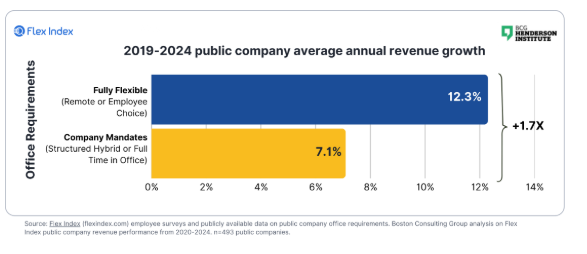
The study reviewed 493 public companies between 2019 and 2024 and found that fully flexible companies i.e those offering remote or employee-led choice – grew revenues 1.7x faster than peers with mandated office structures.
Fully flexible companies posted 12.3% annual revenue growth, compared to just 7.1% for those with structured hybrid or full-time office mandates.
Grow remote – future of work pulse (edition #5) 6
Even after adjusting for industry and company size, the performance gap remained: fully flexible firms still grew 34% faster than peers, with a median adjusted growth rate of 7.8% vs. 5.8%.
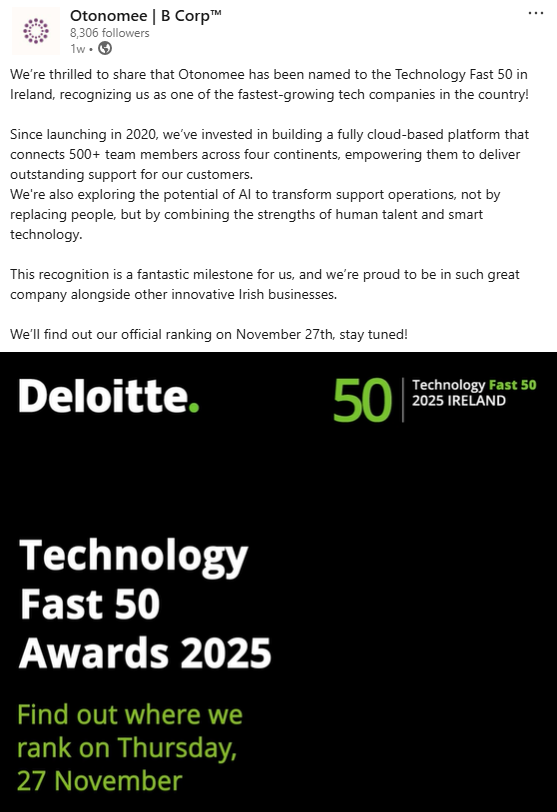
Is the same thing visible in Ireland? Irish success story Otonomee have recently been named to the “Deloitte Technology Fast 50 in Ireland”, which recognised them as one of the fastest-growing tech companies in the country – and yes they are all in on a remote first operating model!
Grow remote – future of work pulse (edition #5) 7
The takeaway? When flexibility is applied with intention and backed by investment in a remote first culture and outcomes-based performance – it becomes a strategic asset.
“Flexible work policies are a sign of organisational cultures that trust employees, measure impact over input, and recognise that different people need different conditions to do their best work.” – Debbie Lovich, BCG Managing Director
Grow Remote Opinion:
This isn’t about where work is done anymore – it’s about performance levers and getting the most from how work is done. The best-performing companies are proving that trust-based, flexible operating models drive not just retention and wellbeing, but revenue and results.
For Irish employers and policymakers, the message is clear: remote and flexible work shouldn’t be treated as fringe or experimental. When designed intentionally, they are core to competitiveness. Businesses that get this right now will build the agility and talent pipelines they need to thrive in the future of work.
2) Ireland Tops EU Life-Work Rankings Index – Now Let’s Leverage It
For the second year in a row, Ireland has been named the best country in Europe for life-work balance, securing the top spot in Remote.com’s 2025 Index. With a score of 82.89, Ireland ranked ahead of countries like Iceland, Belgium, and Denmark thanks to improvements in safety, shorter working weeks, and a strong performance across inclusivity and wellbeing metrics.
“Ireland remains the best country in Europe to live and work… a hard-working yet warm and inclusive workplace culture.” – Remote.com Index 2025
Grow remote – future of work pulse (edition #5) 8
Ireland’s strengths = generous annual leave, solid safety nets, high happiness scores, and one of Europe’s top six minimum wages all paint a picture of a nation where quality of life is high and workers can thrive.
Grow Remote Opinion:
This ranking should be viewed as more than a national compliment, it’s a strategic calling card. Ireland is already a top-tier location for life. It should now become the top-tier location for remote work.
As outlined in Grow Remote’s Pre-Budget Submission 2026, the country must act now to “develop and resource a strategy to land international locationless jobs in Ireland” and create national remote job targets. The submission points to the potential for over €100 million annually in new tax revenue if Ireland captured even 10% of the remote roles currently available across Europe.
We’ve done it before: IDA Ireland reshaped our economy by attracting foreign direct investment. Now, a similar intervention is needed to win the battle for globally distributed jobs and to ensure those jobs land in every community in Ireland.
3) Rural Digital Hubs Are Working — Here’s the Evidence
New academic research by Dr. Ann O’Brien (University of Galway), a long-standing member of the Grow Remote North East Galway chapter and co-authors Prof Eoin Whelan, Dr Yixin Qiu and Prof Jonathan Levie, offers fresh insight into the role of rural digital hubs in sustaining and scaling remote work across Ireland.
The findings? Hubs are not just a space to work- they’re a catalyst of connection, routine, focus, and local belonging.
“While the cost-saving and proximity benefits of hubs are real, workers primarily value them for the sense of structure, concentration, and community they enable.”
Key insights from the study 👇
Structure and routine: Users reported that hubs helped them establish better work habits compared to home-based remote work.
Social connectedness: Many workers valued casual interactions in hubs that offset feelings of isolation and improved mental wellbeing.
Productivity and boundaries: Hubs helped users separate work from home life, improving concentration and work-life balance.
Local economic benefits: By staying local, workers re-engaged with their communities—both socially and economically.
Grow Remote Opinion:
Hubs are proving their worth not just as infrastructure, but as community-centric enablers of remote work success.
Ann O’Brien’s research offers a timely reminder: remote working doesn’t have to mean working alone. When local hubs are accessible, workers gain more than a desk – they gain structure, social capital, and a stronger connection to place.
As Ireland continues to scale remote and hybrid models, digital hubs must be treated as vital assets—not just co-working spaces. The Connected Hubs network, with over 390 locations, is a strategic resource in our national remote work ecosystem.
Grow remote – future of work pulse (edition #5) 9
We’re proud to see this work come from a valued community member. As Ireland scales its remote work ecosystem, Ann O’Brien’s research reinforces that hubs will play an increasingly strategic role in balancing flexibility with connectivity, productivity and community.
They offer a practical alternative to the challenges of remote such as social connection, help embed remote workers in local communities, and act as anchors for distributed team culture.
Our mission is to solve the challenges of remote work in order to unlock social, economic and environmental change for individuals, employers and local communities.
One of the ways we deliver this is though fully funded training courses for leaders in Ireland 👇
“Leading Remote & Hybrid Teams” is now open for 2026 registrations of interest here.
Grow remote – future of work pulse (edition #5) 10
The Robert Walters 2026 Talent Trends report states that “Understanding talent trends is essential for organisations navigating today’s fast-changing workforce.